Resources - Driverless Transport Field Notes
Practical guides, operational considerations, technology explainers, and driverless transport terminology for autonomous shuttle deployment in managed environments.
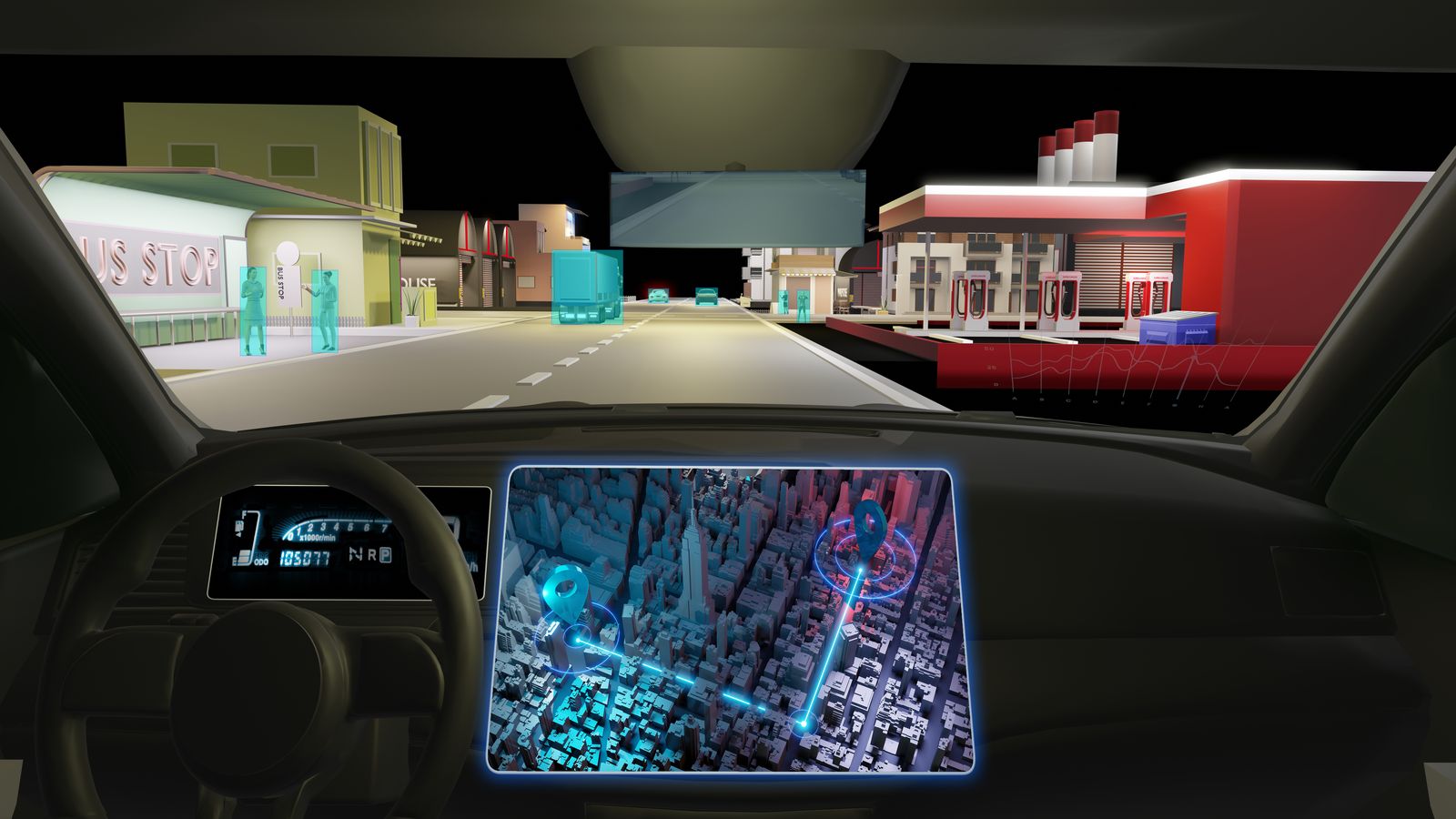
The resources section is structured as a field guide rather than a technical manual. It covers practical questions that arise when evaluating, planning, or operating low-speed autonomous shuttle systems - the kind of questions that product brochures rarely address directly.
The entries here draw on the documented operating context of the Navia and Cybergo platforms and on the general body of evidence around what makes driverless transport viable in managed environments.
Guides and operational notes
Understanding route suitability for autonomous shuttles - What makes a route viable for low-speed autonomous operation: geometry, access control, pedestrian behaviour patterns, lighting, and environmental conditions.
Deployment planning considerations - The steps between deciding to deploy and running a service: route mapping, installation, safety validation, and the operational handover process.
Fleet coordination and scheduling - How multiple autonomous shuttle units operate on shared routes, how scheduling is managed, and what headway looks like at low-speed autonomous speeds.
Technology explainers
How autonomous shuttles navigate their routes - LiDAR, camera systems, sensor fusion, and the route-mapping process that happens before passenger service begins.
Obstacle detection and response - What happens when a pedestrian, vehicle, or unexpected object appears on the route. Response times, detection envelopes, and the safety logic behind low-speed operation.
Electric drivetrain considerations in shuttle-scale vehicles - Battery range, charging cycles, energy use at low speed, and why the electric format suits this class of vehicle operationally as well as environmentally.
Driverless transport terminology
Key terms encountered in autonomous shuttle documentation, defined in operational rather than academic terms.
Geofencing - The practice of defining a geographic operating boundary within which an autonomous vehicle is permitted to operate. Most commercially deployed autonomous shuttles use geofencing as a fundamental constraint, not an optional feature.
LiDAR (Light Detection and Ranging) - A sensor technology that uses laser pulses to build a three-dimensional model of the vehicle’s immediate environment. Used in Navia and most comparable autonomous shuttle platforms for primary environment sensing.
Route mapping - The process of recording a precise geometric model of a new route before autonomous passenger service begins. The vehicle is typically driven manually or at reduced speed through the route multiple times to build the navigation reference.
LSAV (Low-Speed Autonomous Vehicle) - A regulatory and operational classification used in several jurisdictions to define vehicles operating below a specific speed threshold (often 25 km/h or 35 km/h) in ways that may attract different compliance requirements than higher-speed autonomous vehicles.
Managed environment - A deployment context that is controlled or partially controlled: a campus, an airport, an estate, a defined precinct. The opposite of an open public road. Most commercially deployed autonomous shuttles operate in managed environments.
Obstacle response - The vehicle’s behaviour when its sensors detect an unexpected object in its path. Standard behaviour is to slow and stop, wait for the obstacle to clear, and resume. Where the obstacle persists, most platforms have a remote operator notification capability.
Historical context
Five main advantages of driverless cars (2013 analysis) - An early editorial analysis of the operational advantages of driverless transport, written when Navia was entering its first commercial deployments. Useful as a record of how the technology was understood and positioned at that stage.
History of autonomous shuttle development - A narrative covering the development trajectory of the Navia and Cybergo platforms and how the autonomous shuttle category evolved from early research systems to commercial deployment.
Reference documents
Navia press notes (PDF) - Press dossier material from the Navia platform launch period. Available as a PDF reference document.
| *See also: Product documentation | Deployment applications | Vehicle history* |