Navia: The 100% Electric Automated Transport
A technical product page for the Navia automated transport platform - covering the all-electric drivetrain, automation systems, structured route operation, and what 100% automated means in a managed-environment context.
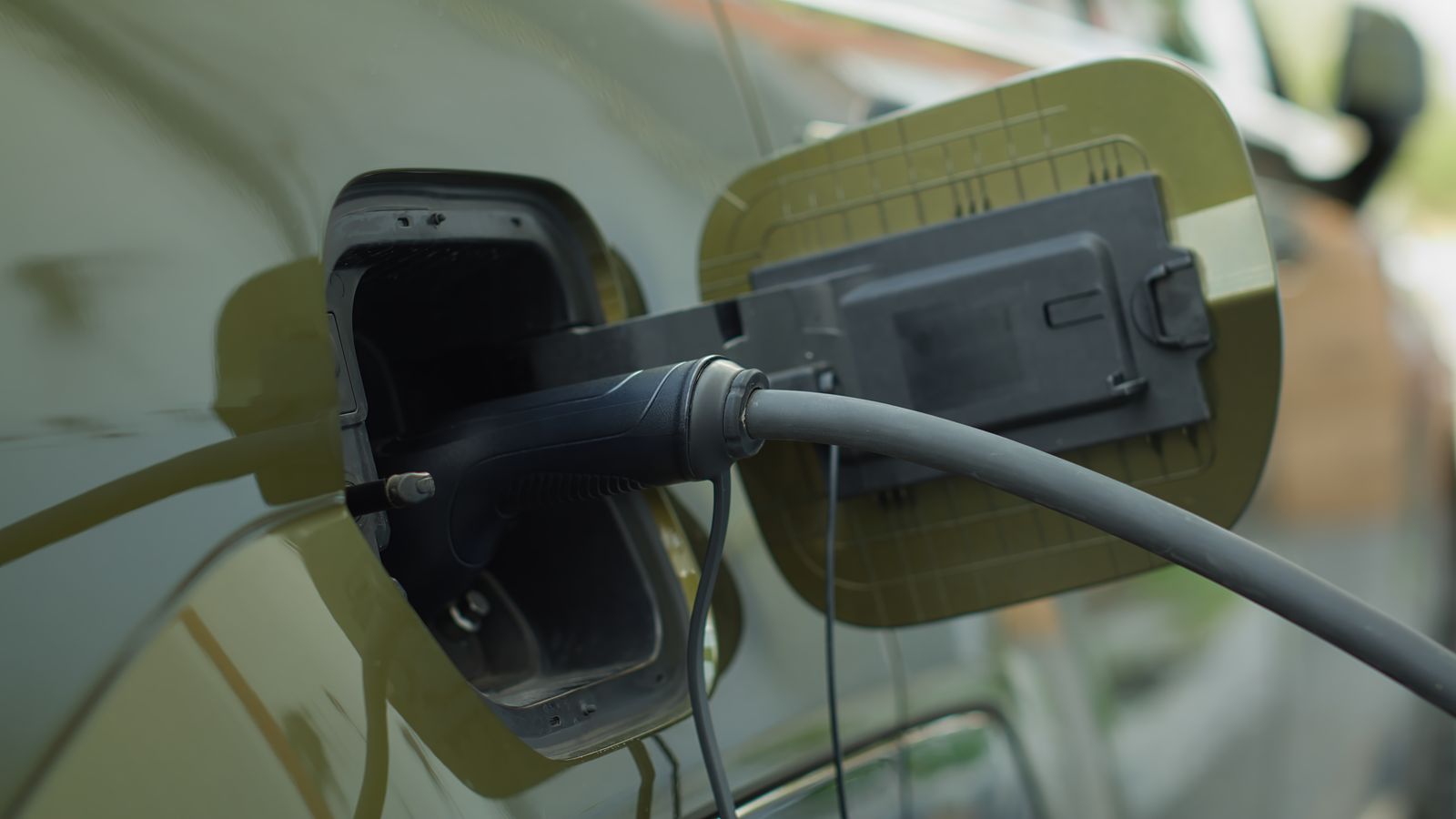
The “100% electric” framing in the Navia product positioning was not incidental. At the time of its development and commercial launch, most discussion of autonomous vehicle technology focused on the automation layer - the sensors, software, and decision systems that allow a vehicle to navigate without a driver. The electric drivetrain was sometimes treated as a secondary characteristic, a useful feature rather than a defining one.
For Navia, the combination was the point. A fully electric drivetrain and fully automated navigation were both essential to the operating profile the platform was designed for - and the reasons each was essential are closely related.
The electric drivetrain
Navia operates at low speed on repeated short circuits. This duty profile is well-matched to battery-electric propulsion in a way that internal combustion is not.
At low speed, combustion engines operate at poor efficiency and generate disproportionate emissions and noise relative to the energy they deliver. In the pedestrian-adjacent environments where Navia operates - campus paths, hospital estate circuits, airport corridors - the noise and exhaust characteristics of a combustion vehicle are practical problems, not just environmental concerns.
An electric drivetrain eliminates both. The vehicle is quiet enough to operate in environments where conventional vehicle noise would be intrusive. Zero tailpipe emissions matter in enclosed spaces, medical environments, and locations with vulnerable passengers.
The efficiency characteristic also aligns with the duty cycle. A Navia route covers the same geometry repeatedly throughout the operating day. The energy consumed per circuit is consistent and predictable. Battery sizing and charging scheduling are straightforward because the operational envelope is defined. Range anxiety - a real planning constraint for electric vehicles with variable routing - is not a factor in a fixed-route autonomous shuttle application.
What 100% automated means
The automation claim in the product title requires the same careful reading as the “commercially available” framing in the launch positioning.
“100% automated” means that under normal operating conditions on a mapped route, the vehicle navigates, stops, and manages passenger boarding without driver input. There is no human in the vehicle whose attention is required for the vehicle to operate. The automation handles the full driving task within the defined operating envelope.
It does not mean the vehicle can navigate any environment, adapt to unmapped situations without support, or operate indefinitely without maintenance and oversight. Autonomous shuttle operation at this stage of development requires a defined route, a mapped operating environment, and a support structure that can respond to situations outside normal parameters - a vehicle that stops due to an obstruction and cannot self-clear, a route modification required by temporary construction, an unexpected failure mode.
That support structure is operational overhead, not a failure of the automation. It is how every transit system works. The comparison is not to a human driver sitting in the vehicle but to the infrastructure required to operate any transit route reliably. Fleet coordination, remote monitoring, and route scheduling at this level increasingly rely on cloud automation software to manage the operational logic that sits behind the vehicle itself.
The operating environment
The electric and automated characteristics of Navia both depend on and reinforce the managed-environment deployment model.
Electric charging infrastructure can be integrated into fixed route stops or depot facilities because the vehicle returns to known locations predictably. Automated navigation works reliably because the route geometry and obstacle environment are defined and can be modelled precisely. The two characteristics are complementary at a practical level - neither would perform as well in a general-purpose context.
This is worth emphasising because the product positioning of Navia as a “100% electric automated transport” could be read as a partial description of a general-purpose autonomous electric vehicle. It is more accurately understood as a complete description of a specific vehicle designed for a specific operating context - one in which both the electric and automated characteristics are fully expressed rather than partially realised.
Low-speed structured routes
The speed range of Navia is relevant to both characteristics. Below roughly 20 km/h, the dynamics of electric propulsion are straightforward and efficient. Below 20 km/h, the sensor response times and stopping distances available to automated navigation systems make obstacle response consistent and safe within the constraints of mixed pedestrian and vehicle environments.
Low-speed structured routes are not a limitation on the technology. They are the domain where the technology is at its most effective. The academic and commercial effort that has gone into making autonomous vehicles work at motorway speed in mixed urban traffic is extensive and ongoing. The effort that made Navia work as a commercial passenger service - at walking-adjacent speed on a defined route - was focused, tractable, and produced real deployments.
The NHTSA guidance on automated driving systems and low-speed automated vehicle safety provides useful regulatory context for how this class of vehicle is evaluated and positioned within U.S. safety frameworks.